Ambianceintel WiFi sensing for privacy-first presence, motion and activity monitoring

Use cameras when you need images. Use ambient intelligence when you only need context.
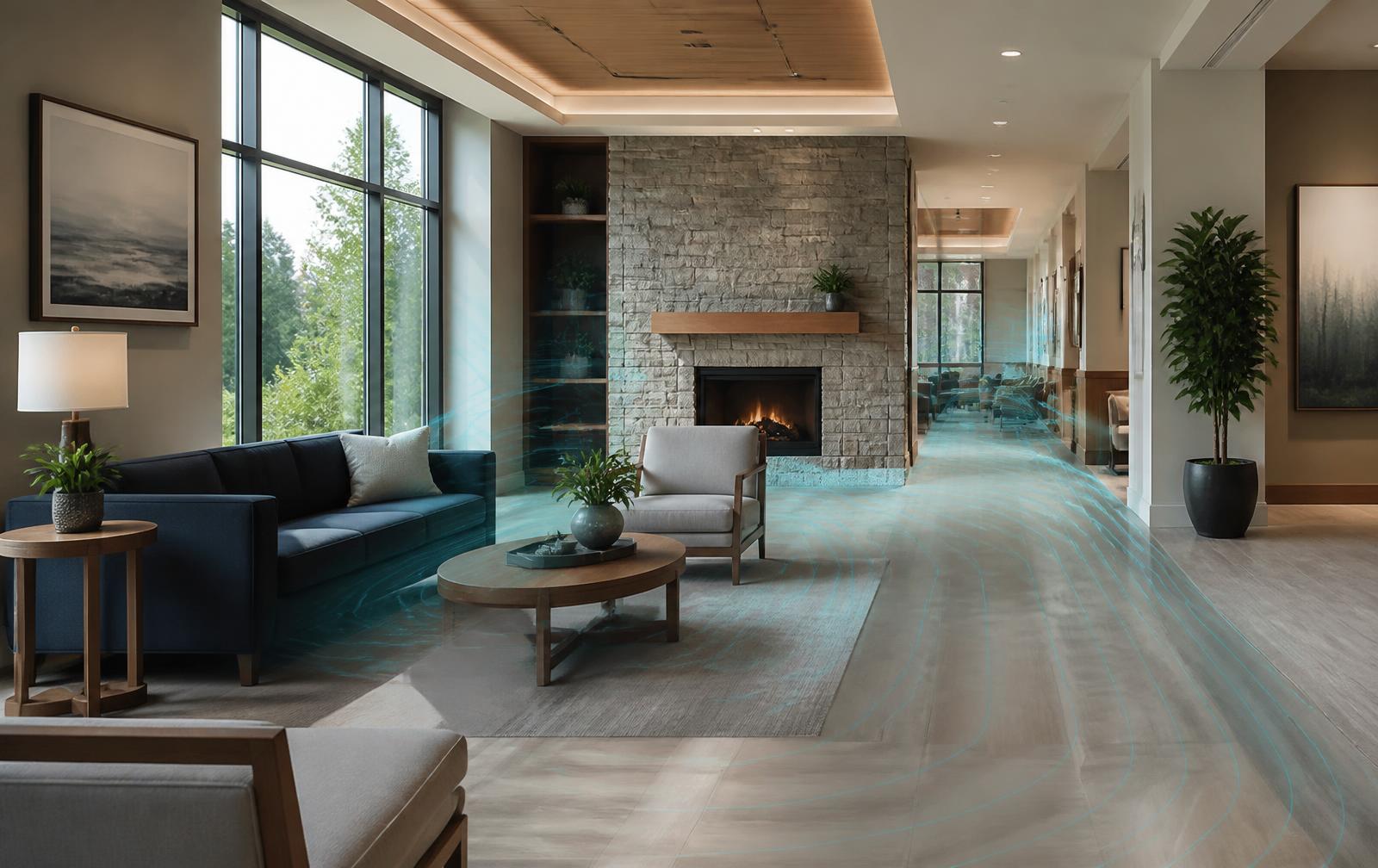
Routine and unusual inactivity can be understood without putting private spaces on camera.
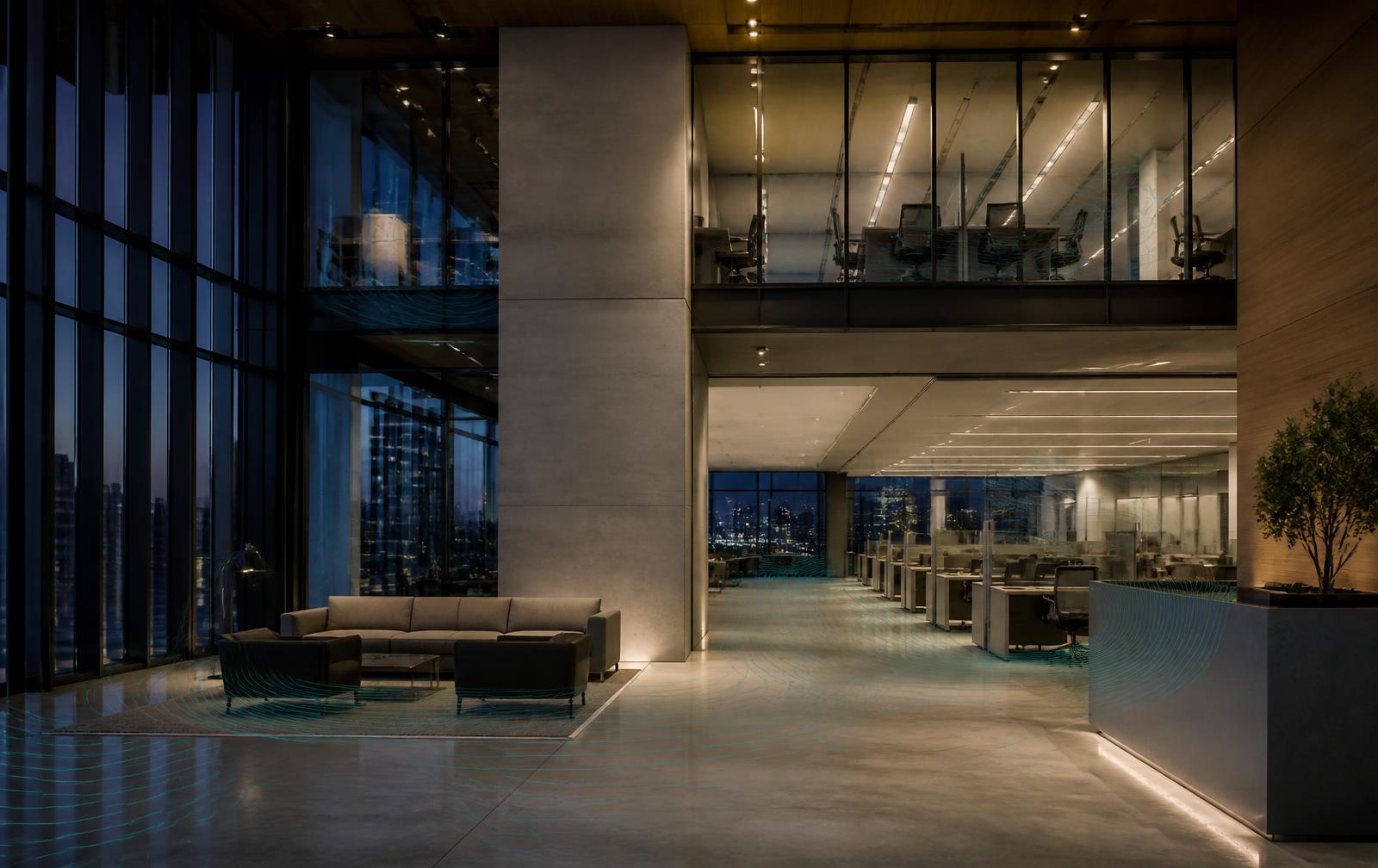
Zone-level occupancy informs operations, energy and safety while minimizing collected data.
Core capabilities
What a space can tell you when nobody is being watched
Eight capabilities that turn distributed, mostly non-imaging signals into a small number of states an operator can act on.
Presence Intelligence
Know whether a space is occupied or vacant, without visually identifying anyone in it.
Activity Awareness
Understand movement, inactivity and changes in activity level across a zone.
Routine Intelligence
Learn what normal looks like for a space, then surface meaningful deviations from it.
Occupancy Analytics
See how rooms, floors and facilities are actually used over hours, days and seasons.
Privacy-First Safety
Maintain awareness in sensitive spaces where continuous video is not appropriate.
Anomaly Detection
Detect deviations from an established baseline and escalate only what matters.
Multi-Sensor Fusion
Combine Wi-Fi sensing, mmWave, PIR, BLE, door contacts, UWB — or cameras when appropriate.
Edge Intelligence
Process sensitive information locally where practical, sending events rather than raw signal.
Why Ambianceintel exists
Not Every Problem Needs a Camera
Cameras are excellent when visual evidence or identification is genuinely required. Ambianceintel is for the large set of situations where the only thing needed is context: occupied or vacant, moving or inactive, normal or unusual, duration and environmental state.
A camera may capture
- Faces and identifiable appearance
- Clothing and personal belongings
- Screens, whiteboards and documents in frame
- Continuous footage requiring storage and retention policy
- Anyone who passes through frame, whether relevant or not
Ambianceintel may only need to output
- Room occupied
- Activity stopped
- Unusual inactivity detected
- Zone vacant
- Duration and environmental state
This is a data-minimization argument, not an argument against cameras. Many buildings are best served by both: cameras where an image is the required output, ambient sensing everywhere the question is narrower than that.
Technology flexibility
The Right Sensor for the Right Problem
Ambianceintel does not claim Wi-Fi sensing solves everything. The platform selects and combines modalities based on the environment and the question being asked.
| Modality | Strength | Best applied to |
|---|---|---|
| Wi-Fi sensing (CSI) | Broad activity and presence across whole rooms | Existing network infrastructure, low-bandwidth deployments, wide coverage |
| mmWave radar | Fine motion and stationary presence | Posture and fall confirmation, small zones, respiration-related sensing where validated |
| PIR | Simple, low-cost motion detection | Corridors, storage, supplementary coverage, cost-sensitive sites |
| Door / contact sensors | Entry and exit context | Transitions between zones, after-hours access, vacancy confirmation |
| BLE / device presence | Trusted device and staff context | Distinguishing staff from unknown activity, asset context |
| UWB | Precise ranging and localization | Where position accuracy inside a zone genuinely matters |
| Cameras | Visual verification and evidence | Where an image is the required output — identification, evidence, dispute resolution |
Sensor fusion
Signals in. Meaningful events out.
Each modality has a failure mode. Fusion combines them against a learned baseline so operators receive a small number of trustworthy events instead of a stream of raw detections.
- Wi-Fi sensing
- mmWave
- PIR
- Door contact
- BLE presence
- Room occupied
- Activity stopped
- Unusual inactivity
- Zone vacant
Industries
Deployed where privacy and awareness both matter
Care & Aging
Ambianceintel gives care teams and families activity intelligence about a home or suite — presence, routine and unusual inactivity — without cameras in private rooms and without asking anyone to wear a device.
ExploreSecurity
Alarms tell you something happened. Ambient sensing tells you what is happening around it. Ambianceintel adds context to existing security infrastructure — it does not replace cameras where visual evidence is required.
ExploreSmart Buildings
Most buildings run on schedules and assumptions. Ambianceintel replaces the assumption with measured occupancy — zone by zone, hour by hour — so systems and staff respond to real use.
ExploreHospitality
Hotels need to know whether a room is in use — not what a guest is doing. Ambianceintel delivers room state and operational signals with no cameras in guest rooms.
ExploreProperty Management
Vacant units, common areas and turnover periods are where portfolios lose money and visibility. Ambianceintel provides property state without installing cameras in people's homes.
ExploreGovernment
Public institutions need situational awareness that stands up to scrutiny. Ambianceintel uses non-imaging sensing, anonymous occupancy and edge intelligence so facilities gain insight while data collection stays minimal and defensible.
ExploreTelecom / ISP
Operators already have hardware in millions of homes and businesses. On supported network hardware, that infrastructure can also provide ambient awareness — delivered as a software-enabled service rather than another truck roll.
ExploreEmerging Markets
Bandwidth, power and hardware budgets differ by market — the need for awareness does not. Ambianceintel is designed to run at the edge, send small event payloads and build on connectivity that is already in place.
ExploreAmbianceintel Rescue — new division
Spatial intelligence for emergency response
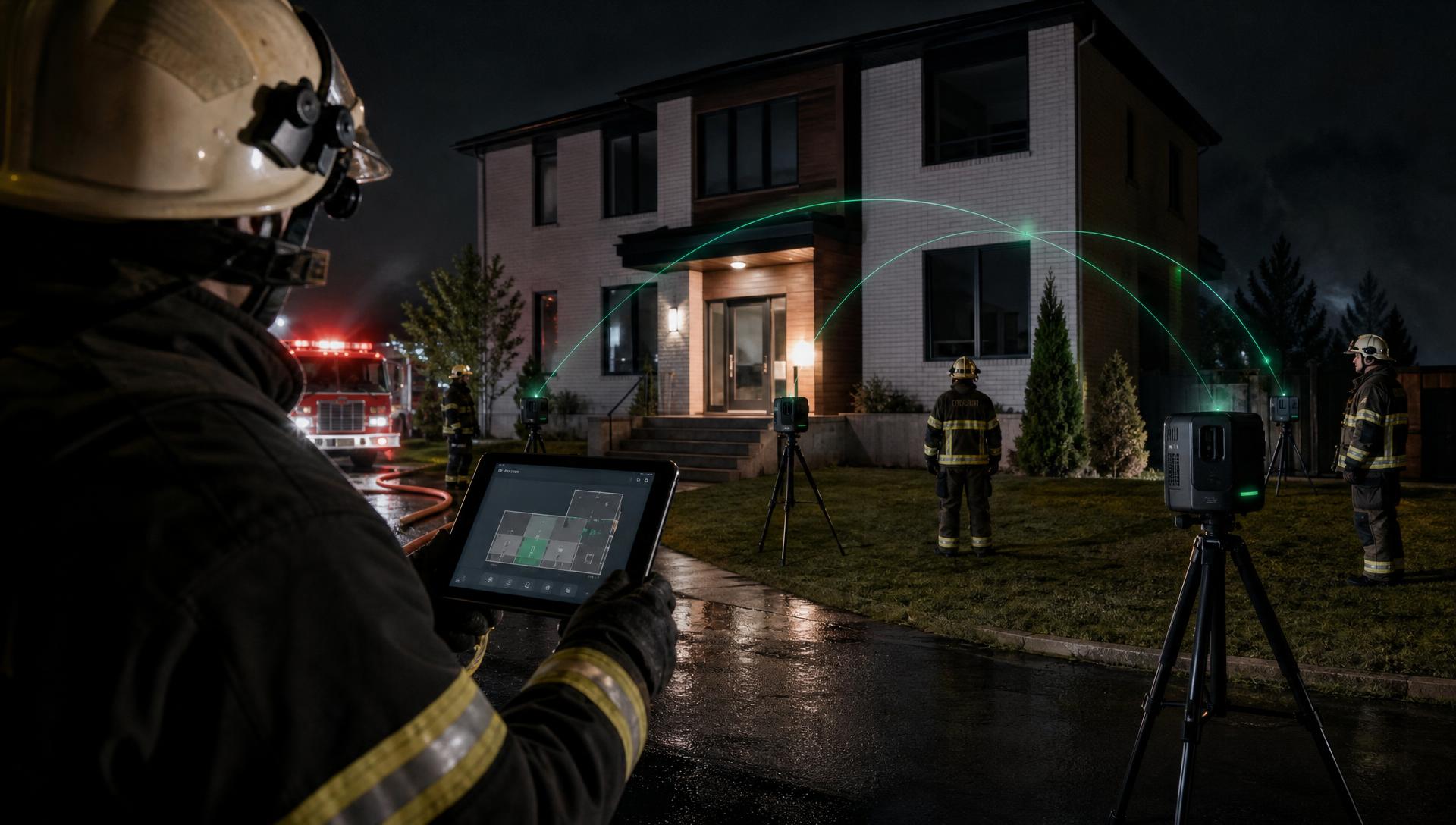
The same sensing and fusion principles, packaged as a portable system for fire, technical rescue, industrial and disaster response teams. Deployable in minutes and designed to operate without cloud connectivity.
- Possible human-like signal
- Approximate activity zone
- Known responder
- Confidence and signal quality
Ambianceintel Rescue is being developed as supplemental decision-support technology and is not intended to replace established search-and-rescue procedures.
Privacy commitments
Know what is happening. Collect only what you need.
Privacy is a design constraint in Ambianceintel, applied at the sensing layer — not a policy added after the data is already collected.
Read the privacy model- No facial recognition by default
- No continuous audio recording
- No requirement for video
- Local and edge processing options
- Minimal event data
- Configurable retention
- Role-based access control
- Encryption and audit logs
Pilot program
Start small. Prove the value.
A scoped pilot with defined success metrics, a findings report and an honest scale decision at the end of it.